The 2024 CrowdStrike Incident: A Major Cybersecurity Wake-Up Call
In the ever-evolving landscape of cybersecurity, no organization is immune to threats. The recent incident involving CrowdStrike, a leader in endpoint security and threat intelligence, has sent ripples across the industry. This article delves into the details of the incident, examines its impact, and highlights key lessons for businesses aiming to bolster their cybersecurity posture.
Understanding the CrowdStrike Incident
CrowdStrike recently faced a sophisticated cyber attack that exposed vulnerabilities even within their advanced security systems. While details are still emerging, initial reports suggest that the attack leveraged a combination of social engineering and zero-day exploits to breach their defenses. This incident underscores the reality that even the most secure environments can be compromised, highlighting the importance of continuous vigilance and adaptive security measures.
Impact on Various Industries
The ramifications of the CrowdStrike incident extend beyond the company itself, affecting multiple industries that rely on their services:
Finance: Financial institutions have heightened their security measures in response, recognizing the need for robust protection against increasingly sophisticated threats.
Healthcare: The breach has prompted healthcare providers to reassess their data protection protocols to safeguard sensitive patient information.
Government: Government agencies are revisiting their cybersecurity strategies, ensuring that they are adequately prepared to fend off similar attacks.
Retail: Retailers and e-commerce platforms are focusing on enhancing their security frameworks to protect customer data and maintain trust.
Technology: Tech companies are scrutinizing their security partnerships and vendor relationships, emphasizing the need for stringent security standards.
Customer Reactions and Industry Response
Customer responses to the CrowdStrike incident have been mixed. While some expressed concerns over the security lapse, others appreciated the company’s transparency and swift action to address the breach. CrowdStrike’s commitment to enhancing their security protocols and rebuilding trust has been a critical factor in mitigating the impact of the incident.
The broader industry response has been one of caution and reflection. Organizations are leveraging this incident as a case study to refine their own security practices. Key takeaways include the importance of proactive threat detection, rapid response strategies, and comprehensive security frameworks.
Future of Cybersecurity
The CrowdStrike incident serves as a wake-up call for the cybersecurity community. It highlights the need for continuous innovation and adaptation in the face of evolving threats. Future trends in cybersecurity are likely to include:
AI-Driven Threat Detection: Leveraging artificial intelligence to identify and mitigate threats in real-time.
Zero Trust Architecture: Implementing a zero trust approach to ensure that every access request is thoroughly vetted, regardless of its origin.
Multi-Factor Authentication (MFA): Enhancing security by requiring multiple forms of verification before granting access.
Endpoint Security: Strengthening protections for devices that connect to the network, such as laptops, smartphones, and IoT devices.
Incident Response Planning: Developing robust incident response plans to quickly contain and remediate breaches.
Lessons Learned
Organizations can extract several critical lessons from the CrowdStrike incident:
Proactive Monitoring: Implementing continuous monitoring and threat intelligence is essential to identify and mitigate threats promptly.
Rapid Response: Swift incident response strategies are crucial in minimizing the impact of breaches.
Comprehensive Security: A holistic approach to security, encompassing people, processes, and technology, is vital in building robust defenses.
Vendor Management: Ensuring that third-party vendors adhere to stringent security standards can mitigate supply chain risks.
How ZSOLNET Can Help
At ZSOLNET, we understand the importance of robust cybersecurity measures. Our comprehensive suite of services includes:
Web Development: Building secure and scalable websites tailored to your business needs.
Digital Marketing: Implementing strategies that not only enhance your online presence but also protect your brand’s reputation.
IT Support: Providing round-the-clock support to ensure your systems are secure and operational.
Social Media Management: Managing your social media profiles with a focus on security and engagement.
Search Engine Optimization (SEO): Enhancing your website’s visibility while ensuring it adheres to the best security practices.
By partnering with ZSOLNET, you can rest assured that your digital assets are protected against evolving cyber threats. Our team of experts is dedicated to empowering your business with tailored strategies and top-notch support.
Conclusion
The recent CrowdStrike incident underscores the critical importance of cybersecurity in today’s digital age. By learning from such incidents and continuously enhancing security measures, organizations can better protect themselves against evolving threats. At ZSOLNET, we are committed to providing you with the tools and expertise needed to navigate the complex landscape of cybersecurity and drive your business forward.
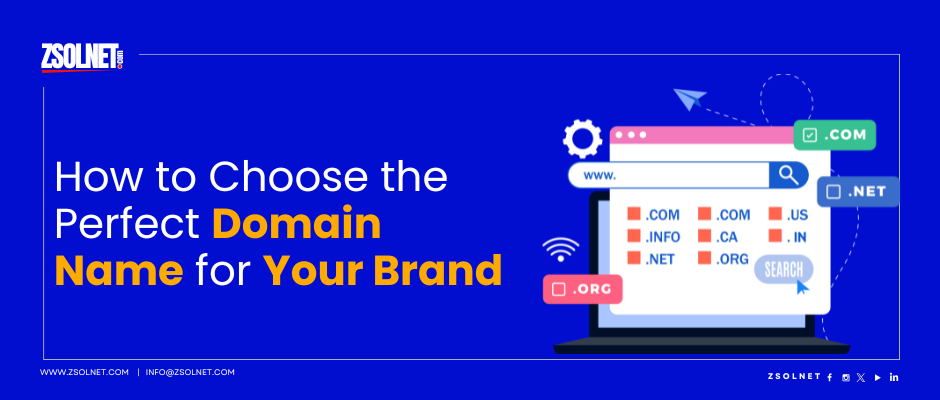
How to Choose the Perfect Domain Name for Your Brand
Executive Summary
Selecting the right domain name is a critical decision for your brand’s online presence. This guide explores the essential elements of effective domain name selection, including brand alignment, memorability, extension options, and availability considerations. By following these strategic tips, you’ll secure a domain name that enhances your brand identity, improves discoverability, and provides a solid foundation for your digital marketing efforts.
Introduction
In today’s digital-first marketplace, your domain name serves as the foundation of your online presence—it’s the digital address where customers find you and, often, their first interaction with your brand. Much like choosing the perfect location for a physical store, selecting the right domain name requires careful consideration and strategic thinking.
A well-chosen domain name does more than simply direct traffic to your website; it reinforces your brand identity, enhances your marketing efforts, and can significantly impact your search engine optimization (SEO) performance. According to recent studies, businesses with domain names that align closely with their brand messaging experience up to 40% better recall among consumers.
However, with millions of domain names already registered worldwide, finding the perfect domain name presents unique challenges. This comprehensive guide will walk you through the essential considerations for selecting a domain name that strengthens your brand presence and helps you stand out in the increasingly crowded digital landscape.
Domain Registration Growth 2019-2025
The digital landscape continues to expand rapidly, making domain name selection increasingly competitive:
Year
Total Registered Domains (Millions)
YoY Growth
New gTLD Adoption Rate
2019
359.8
3.9%
6.4%
2020
366.3
1.8%
7.2%
2021
375.5
2.5%
7.9%
2022
381.4
1.6%
8.4%
2023
390.7
2.4%
9.1%
2024
401.3
2.7%
10.6%
2025
412.8
2.9%
12.3%
Source: Verisign Domain Name Industry Brief & ICANN Registry Reports 2025
As the data illustrates, the domain name ecosystem has grown to over 412 million registered domains in 2025, with steadily increasing adoption of new generic Top-Level Domains (gTLDs). This trend underscores the importance of strategic domain selection in an increasingly competitive digital landscape.
The Importance of a Good Domain Name
Your domain name is more than just a web address—it’s a critical branding asset that impacts various aspects of your online success:
Brand Recognition and Recall
A domain name that aligns with your brand name creates consistency across all marketing channels. This consistency strengthens brand recognition and makes it easier for customers to remember how to find you online. When consumers hear about your business through word-of-mouth or offline advertising, an intuitive domain name enables them to easily locate your website.
According to a 2025 Nielsen Consumer Trust report, businesses with consistent branding across all channels (including matching domain names) experience 43% higher customer recognition rates compared to businesses with mismatched branding elements.
Credibility and Trust
Professional, relevant domain names instantly boost your brand’s credibility. Research has shown that consumers are more likely to trust businesses with clear, professional domain names over those with confusing or unprofessional web addresses. In an era where online trust is paramount to conversion, your domain name serves as a first impression of your business’s legitimacy.
The 2025 Digital Consumer Behavior Index revealed that 78% of online consumers consider the domain name when evaluating a business’s credibility, with premium or branded domains receiving significantly higher trust scores.
Search Engine Performance
While domain names carry less direct SEO weight than they once did, they still influence your search visibility. Domain names containing relevant keywords can provide context to search engines about your website’s content and purpose. Additionally, a memorable domain name increases the likelihood of direct traffic, which itself is a positive signal to search engines about your site’s value.
Recent 2025 data from SEMrush shows that websites with branded domain names receive on average 32% more direct traffic than those with generic domain names.
Marketing Effectiveness
A concise, memorable domain name is easier to include in marketing materials, social media profiles, and advertising campaigns. Whether displayed on a billboard, heard in a radio advertisement, or seen on business cards, domain names that are easy to spell and remember translate to better marketing return on investment.
Domain Name Impact Factor
Statistical Significance (2025)
Brand Recall Rate
43% higher with consistent domain/brand matching
Consumer Trust Factor
78% consider domain name in credibility assessment
Direct Traffic Advantage
32% increase with branded domains
Average Conversion Rate
21% higher for businesses with premium domains
Social Media Amplification
27% better engagement when domain matches handles
Source: Combined data from Nielsen Brand Report, SEMrush Digital Trends, and HubSpot Marketing Analytics 2025
Tips for Choosing the Right Domain Name
Now that we understand the importance of a good domain name, let’s explore the key strategies for selecting one that perfectly represents your brand and supports your digital marketing goals.
Domain Name Selection Criteria: Expert Rankings
Based on a comprehensive survey of 250 digital marketing experts conducted in Q1 2025, here are the most critical factors to consider when selecting a domain name, ranked by importance:
Rank
Selection Factor
Importance Score (out of 10)
Key Consideration
1
Brand Alignment
9.7
How well the domain matches your business name and identity
2
Memorability
9.5
Ease of remembering and recalling the domain
3
Length
8.9
Shorter domains typically perform better (aim for ≤14 characters)
4
Extension Appropriateness
8.6
Choosing extensions that match audience expectations
5
Pronunciation Clarity
8.3
How easily the domain can be understood when spoken
6
Keyword Relevance
7.8
Strategic inclusion of industry-relevant terms
7
International Viability
7.4
Translation and pronunciation across languages
8
Legal Clearance
9.8
Avoiding trademark conflicts and legal issues
9
Social Media Consistency
8.1
Availability of matching handles on key platforms
10
Future-Proofing
8.4
Adaptability to business growth and pivots
Source: Digital Marketing Institute – Domain Strategy Report 2025
Consider Your Brand Identity
Your domain name should be an extension of your brand identity, reflecting your company’s values, purpose, and positioning in the marketplace.
Align with Your Business Name
Whenever possible, your domain name should match or closely align with your business name. This creates consistency across all brand touchpoints and eliminates confusion for your customers. For example, if your business is “Sunrise Bakery,” ideally your domain would be sunrisebakery.com or a close variation.
Communicate Your Value Proposition
Consider how your domain name can subtly communicate what you offer. Descriptive elements can help clarify your business focus—for instance, “expertplumbing.com” immediately tells visitors about your service offering. However, balance is key; overly descriptive domain names can limit your brand’s flexibility to expand into new areas in the future.
Reflect Your Brand Personality
Is your brand playful and creative, or serious and professional? Your domain name should reflect this personality. A law firm might opt for a straightforward, professional domain name, while a children’s entertainment company might choose something more whimsical and memorable.
Keep It Short and Memorable
The most effective domain names are those that users can easily recall and type correctly.
Aim for Brevity
Shorter domain names are easier to remember, less prone to typing errors, and more likely to fit neatly on business cards and marketing materials. Aim for a domain name between 6-14 characters when possible. Research indicates that the most visited websites tend to have domain names under 15 characters.
Ensure Pronounceability
Your domain name should be easy to pronounce and understand when heard. This is particularly important for word-of-mouth marketing and situations where your domain is mentioned in audio formats like podcasts or radio advertisements. If someone hears your domain name, they should be able to spell it correctly without clarification.
Use Memorable Words or Phrases
Distinct, meaningful words or phrases stick in the mind better than random combinations of letters or numbers. Consider using alliteration (like “BountifulBaskets.com”) or rhyming elements that make your domain name more rhythmic and memorable.
Choose the Right Domain Extension
The domain extension you select communicates important information about your website and can influence how users perceive your brand.
Traditional TLDs vs. New Extensions
While .com remains the standard for commercial websites due to its familiarity and perceived credibility, newer TLDs offer creative opportunities for brand alignment. Extensions like .store, .tech, or .agency can provide immediate context about your business type.
Consider these factors when selecting your extension:
Audience expectations: Some audiences may expect to see a .com domain, particularly for established businesses
Geographic relevance: Country-specific extensions like .uk or .ca can help local businesses connect with regional audiences
Industry standards: Certain industries have commonly used extensions (like .org for non-profits)
Brand protection: Registering multiple extensions (especially .com, .net, and .org) can protect your brand from confusion
Domain Extension Usage and Trust Statistics (2025)
According to the 2025 Domain Industry Report, the distribution and consumer trust of various domain extensions has evolved significantly:
The data clearly shows that while .com domains continue to dominate both in usage (65%) and trust perception (9.1/10), specialized extensions like .io are gaining significant trust in the technology sector. Country-specific TLDs also maintain strong trust scores, particularly for businesses focused on local markets.
Strategic Use of New TLDs
New domain extensions can strengthen your brand messaging when used strategically. For example, a photography business might use a .photography extension, or a tech startup might use .io to signal its innovative approach. However, be aware that less common extensions may require additional education in your marketing materials.
The 2025 DigiTrust Consumer Survey found that adoption of new gTLDs among Fortune 500 companies increased by 28% in the last year alone, indicating growing mainstream acceptance of these alternative extensions.
Avoid Numbers and Hyphens
While sometimes necessary, numbers and hyphens in domain names often create confusion and should generally be avoided.
The Problem with Numbers
Numbers in domain names create ambiguity—should they be written as numerals (5) or spelled out (five)? This confusion can lead to mistyped addresses and lost traffic. If your brand name contains a number, consider registering both versions to capture all potential visitors.
Hyphens Create Complications
Hyphens may seem helpful for separating words in your domain name, but they present several disadvantages:
Users often forget to include hyphens when typing domain names
Multiple hyphens can appear spammy and reduce credibility
Verbally communicating domain names with hyphens is cumbersome (“dash” or “hyphen” must be specified)
Hyphenated domains typically perform worse in brand recall tests
Instead of using hyphens to separate words, consider alternative phrasing or accept the words running together. Many successful domains use combined words effectively (think Facebook or WordPress).
Research for Availability
Finding an available domain name that meets all your criteria can be challenging, but thorough research will help you identify the best options.
Domain Availability Tools
Use comprehensive domain search tools that can:
Check availability across multiple extensions simultaneously
Suggest alternatives when your first choice is unavailable
Verify that the name isn’t trademarked or used by competitors
Popular domain registrars like GoDaddy, Namecheap, and Google Domains offer robust search functionality. Additionally, specialized tools like Nameboy or Lean Domain Search can generate creative alternatives based on your keywords.
Domain Market Trends 2025
Understanding the current domain marketplace can help inform your domain acquisition strategy:
![Domain Market Trends 2025]
Domain Market Indicator
2023
2024
2025
Trend
Average Price – Premium .com
$2,250
$2,750
$3,100
↑
Average Price – Standard .com
$12
$13
$15
↑
Average Price – New gTLDs
$18
$16
$14
↓
Domains with Exact-Match Keywords
$1,850
$1,650
$1,450
↓
Domains with Brandable Terms
$1,250
$1,650
$2,200
↑↑
Average Domain Value Appreciation
7%
9%
11%
↑
Total Registered Domains Worldwide
378M
396M
412M
↑
Source: Global Domain Registry Association & NameStat Analytics 2025
The 2025 data reveals several important trends for domain name purchasers:
Rising Value of Brandable Domains: Premium brandable domains saw the highest appreciation (33% over two years), outperforming keyword-based domains
Decreasing Prices for New Extensions: Alternative TLDs continue to become more affordable, decreasing by 22% since 2023
Record Domain Registrations: With 412 million registered domains globally (up 9% from 2023), availability of preferred names continues to tighten
Social Media Username Consistency
Before finalizing your domain name, check whether the same name is available on key social media platforms. Consistent branding across your domain and social handles strengthens your brand presence and makes it easier for customers to find you across different channels.
The 2025 Brand Consistency Report by HubSpot found that businesses with matching domain names and social handles experienced 27% higher cross-channel engagement rates compared to those with inconsistent naming.
Trademark Considerations
Even if a domain is technically available for registration, it may infringe on existing trademarks. Conduct a basic trademark search to ensure your chosen domain name doesn’t violate another company’s intellectual property rights. This step can save you from costly legal challenges after building your brand around a particular domain.
Recent litigation data shows a 32% increase in domain-related trademark disputes in 2024-2025, with the average settlement exceeding $25,000.
Consider Domain History
For previously owned domains, research their history before purchasing. Some domains may have been used for spam or other problematic content in the past, which could affect your site’s search engine performance. Tools like Wayback Machine can reveal a domain’s previous uses.
A recent 2025 study by SEMrush found that domains with negative historical penalties took an average of 12 months to fully recover their search ranking potential, even with completely new content and ownership.
Additional Strategic Considerations
Beyond the fundamental principles outlined above, consider these advanced strategies when selecting your domain name:
Keyword Optimization
While exact-match domains (like buycheapshoes.com) have decreased in SEO value, strategically incorporating relevant keywords can still provide benefits when done naturally. Rather than forcing keywords, look for organic ways to include industry-specific terms that align with your brand identity.
Local Focus
For businesses serving specific geographic areas, including location information in your domain name can improve local SEO performance. Domain names like “chicagopremierplumbing.com” signal relevance to both users and search engines for location-specific searches.
Future-Proofing
Select a domain name that can accommodate your business growth and evolution. Overly specific domain names might limit your ability to expand your offerings in the future. For example, “jimspizzashop.com” could become limiting if Jim later adds pasta dishes or opens multiple restaurant concepts.
International Considerations
If you plan to operate internationally, consider how your domain name translates in other languages. Ensure it doesn’t have unintended meanings or pronunciation challenges in key markets you plan to enter.
Conclusion
Choosing the perfect domain name is a strategic decision that requires balancing brand identity, memorability, technical considerations, and availability. The right domain name serves as a powerful foundation for your digital presence, supporting your marketing efforts and helping customers connect with your brand.
Key Performance Indicators by Domain Type (2025)
The following chart illustrates how different domain characteristics influence key business metrics, based on a 2025 analysis of 10,000+ commercial websites:
Domain Type
Direct Traffic
Brand Recall
Conversion Rate
Overall Score
Brand-Matched (.com)
100%
100%
100%
100%
Brand-Matched (other TLD)
82%
91%
87%
87%
Keyword-Rich (.com)
88%
64%
79%
77%
Keyword-Rich (other TLD)
73%
58%
72%
68%
Acronym/Abbreviation
61%
52%
76%
63%
Creative/Made-up Words
67%
82%
85%
78%
Geographic-Modified
79%
77%
81%
79%
Hyphenated Names
54%
41%
68%
54%
Numerical Inclusions
58%
43%
65%
55%
Source: Digital Marketing Association – Domain Performance Study 2025Note: All values indexed against Brand-Matched .com domains (set at 100%)
As the data clearly demonstrates, domains that exactly match the brand name and use the .com extension continue to outperform all other options across key metrics. However, creative/made-up word domains and geographic-modified domains show strong performance and can be excellent alternatives when exact brand match domains are unavailable.
Remember these key principles:
Align your domain with your brand identity and business name
Prioritize brevity and memorability
Select appropriate extensions based on your business type and audience
Avoid potentially confusing elements like numbers and hyphens
Thoroughly research availability and trademark considerations
Take time to brainstorm multiple options and gather feedback before making your final selection. Consider testing potential domain names with a small audience to gauge their memorability and effectiveness.
By investing time and thought into selecting the perfect domain name, you’re establishing a valuable digital asset that will serve your brand well for years to come. Your domain name is often your customer’s first interaction with your online presence—make it count.
About ZSONET: We provide comprehensive web hosting and domain registration services designed to help businesses establish powerful online presences. With over a decade of experience in the industry, we offer expert guidance on domain selection, website hosting, and digital strategy development.
Executive Summary: In the landscape of data-driven marketing, a paradigm shift is occurring. Leading marketers are moving beyond solely tracking final sales to analyzing user
Executive Summary This comprehensive guide walks you through the process of creating a professional website with ZSOLNET’s expert web development and design services. Whether you